.png)
 1 month ago
64
1 month ago
64
This article is part of the Guardian’s 2026 World Cup Experts’ Network, a cooperation between some of the best media organisations from the 48 countries who qualified. theguardian.com is running previews from three countries each day in the run-up to the tournament kicking off on 11 June.
The plan
The team’s transformation under Sébastien Desabre can perhaps be summed up by one sentence the coach said to Leopardsfoot in an interview: “Discipline must begin on the pitch.” The Frenchman has imposed structure on a national team long associated with chaos and inconsistency. More than a traditional coach, Desabre operates almost like a manager in the English sense of the term, obsessing over details ranging from defensive positioning to the federation’s communication strategy. So far, it has worked.
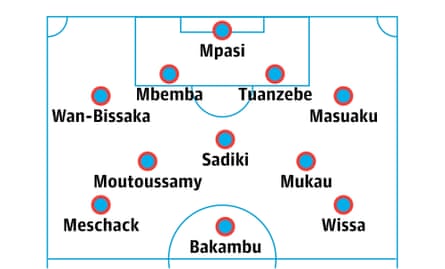
Initially favouring a 4-2-3-1 formation after taking charge in 2022, Desabre has gradually evolved his tactical approach. The DRC now most commonly play in a compact 4-1-4-1 with a deep holding midfielder, two energetic No 8s given freedom to press and carry the ball, and a hard-working striker, usually Cédric Bakambu, constantly stretching defences with his movement.
DR Congo: Group K fixtures
Show17 June v Portugal, Houston (noon local, 6pm BST, 18 June 3am AEST)
23 June v Colombia, Guadalajara (8pm local, 24 June 3am BST, 18 June noon AEST)
27 June v Uzbekistan, Atlanta (7.30pm local, 28 June 0.30am BST, 28 June 9.30am AEST)
The Leopards are also comfortable switching to a back three, used notably during qualifying against Togo and South Sudan. With ball-playing defenders such as Axel Tuanzebe and Chancel Mbemba, plus wing-backs such as Arthur Masuaku and Aaron Wan-Bissaka, the system allows the team to play more aggressively.
The main criticism of Desabre remains the attack as the DRC rarely dominate games or create freely in open play. But defensively, they have become extremely difficult to break down. Under Desabre, at the time of writing, their full squad has not lost a match by more than one goal. That resilience defined qualification: Cameroon eliminated late; Nigeria beaten on penalties; Jamaica defeated in extra time of the intercontinental playoff. Convincing? Not always. Mentally strong? Absolutely.
The coach
Sometimes nicknamed “Tatu Seba” by Congolese fans (“Papa Seba”), Sébastien Desabre arrived in 2022 carrying years of African football experience gained in Uganda, Egypt, Morocco, Tunisia, Angola, Côte d’Ivoire and Cameroon. The former Chamois Niortais coach left Ligue 2 to take on one of the continent’s most talented, and structurally complicated, football nations. “DR Congo is a true football country,” he told Afrik-Foot after qualification. “People love their national team and are proud of it.” Pragmatic by nature, Desabre believes in continuity and stability above all else. The veteran striker Cédric Bakambu credits him with finally giving the Leopards “a framework”. More importantly, he has built a united squad around a clear collective identity, something the DRC had lacked for years.
Star player
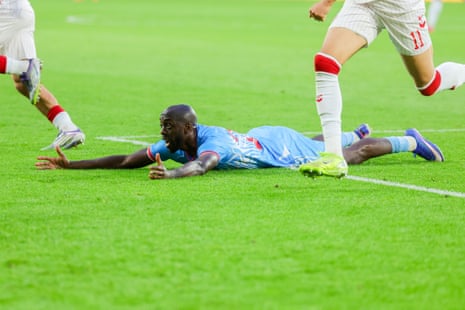
After missing the Africa Cup of Nations in order to regain sharpness following a knee injury, Yoane Wissa arrives at the World Cup carrying huge expectations. Nicknamed “Kovo” (“the bald one”) by Congolese supporters, the Newcastle forward became the first player from the DRC to score more than 10 Premier League goals in a season during his time at Brentford. Deployed usually from the left in the national team, Wissa combines pace with intelligent movement and relentless pressing. His first season at Newcastle was disrupted by injuries, but when fully fit he remains the Leopards’ most dangerous attacking weapon and their biggest international star.
One to watch
There is something unusually elegant about the way Ngal’ayel Mukau plays football. Tall, technically refined and blessed with a decent left foot, the Lille midfielder glides through games with a calmness that is rare for a 21-year-old. He can recover possession, escape pressure, progress with the ball and speed up attacks. Belgium tried hard to keep him but instead Mukau committed early to the DRC, becoming one of several highly rated Belgian-Congolese youngsters helping to reshape the future of the national team. Already linked with clubs such as Barcelona, Mukau could emerge from this tournament as one of Africa’s breakout midfielders.
Unsung hero
He never scores or assists, yet few players are more important to the side than Samuel Moutoussamy. The midfielder is the engine of Sébastien Desabre’s system: pressing, intercepting, covering spaces and recycling possession with remarkable discipline. Not spectacular but very dependable, Moutoussamy sets the emotional tone of the team through his intensity and sacrifice. “We’ll leave our souls on the pitch,” he told Leopardsfoot before the playoff against Jamaica. “We can’t play with fear.” That mentality captures perfectly the spirit of this Congolese side: resilient, combative and emotionally charged.
Probable starting XI
What to expect from fans at games?
Even before the recent Ebola outbreak, travelling to the US was already extremely difficult for most Congolese supporters because of visa restrictions and financial barriers. As a result, the team will rely heavily on its diaspora, particularly in Texas, across North America. Fortunately for the Leopards, Congolese fans are known throughout Africa for bringing atmosphere everywhere they go. Expect dancing, singing, extravagant outfits, painted faces and endless energy. Football culture in Congo is tied deeply to music and celebration, and supporters are famous for their humour and entertainment. The famous superfan “Lumumba Vea” – known for standing still, one arm raised, for 90 minutes in tribute to the iconic statue of the Congolese independence leader Patrice Lumumba, had his visa application for Mexico rejected in March but is still hoping to make the trip after government intervention.
Relations with the US/Trump?
Positive at present, largely because the Trump administration has attempted, with mixed success, to position itself as a mediator in the conflict in eastern Congo. In return, the US has shown growing interest in securing access to Congo’s vast mineral wealth, a strategy that has been described as “peace in exchange for extraction”. At the National Prayer Breakfast in Washington in February, Donald Trump described President Félix Tshisekedi as “a courageous and wonderful man” before quickly praising the economic opportunities Congo represents. The relationship remains pragmatic rather than emotional. Ordinary Congolese supporters still face enormous obstacles obtaining US visas for the World Cup.
Written by Louis Mukoma for Leopardsfoot.com.