.png)
 4 weeks ago
69
4 weeks ago
69
There are times when it’s possible to keep sport in a sensible perspective, and then there are weeks it challenges your very sanity. This has felt like one of those.
Perhaps the US president erecting a cage‑fighting octagon in his back garden is – given the state of the world – not that crazy. After all, it’s probably less tacky than paving over the Rose Garden, or the proposed ballroom‑slash‑droneport‑slash‑triumphal‑arch. You say a World Cup referee has been denied entry to the US because he’s from Somalia? Well, really. Anyone who didn’t see that coming hasn’t been paying attention.
No, I submit that the truly mindboggling performance of the week goes to England cricket alone. The Test captain, Ben Stokes, stayed out too late and broke his own curfew after his team’s much-needed win against New Zealand. He might have got away with it if it weren’t for a pesky Saracens rugby player throwing a punch that landed on the England team’s security guard. Without that inciting incident, would we even have known he’d stayed an hour past his bedtime?
It’s impossible not to feel sympathy for the man. It was his birthday last week. He’d been teetotal for the best part of a year. The curfew was in place because of his teammates’ indiscretions, not his own. And when he was suspended pending investigation, the first person in line to replace him as leader was Harry Brook: the very person fined and given a final warning for clashing with a nightclub bouncer in New Zealand and then lying about it.
Even the ECB, which decided to face out an Ashes defeat without calling anyone to account, wasn’t prepared to do that. Instead, it falls to Joe Root to take the reins of the England team once more. Generous soul as he is, it’s unlikely he is thanking them for the opportunity. He has already had his fill of a gruelling role in which failure – an entirely unavoidable part of any sport – is treated like a crime against the people.
So, if you’ve found the Stokes story utterly wearying, you’re not alone. There’s a sense of familiarity and inevitability about it. England cricket has a long tradition of shooting itself in the foot; it’s also well versed in dropping leaders for the wrong things. Just ask Mike Gatting, who lost the captaincy in 1988 on the flimsiest of pretexts: a tabloid sting rumoured he had spent the night with a barmaid during a Test against West Indies and despite Gatting’s protestations of innocence the chairman of selectors used the excuse to give him the boot.
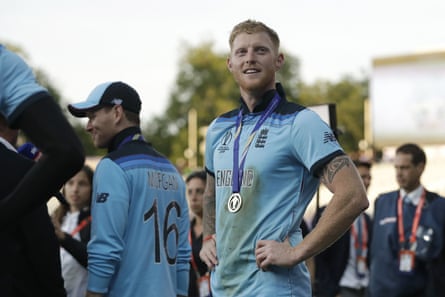
Perhaps it is cricket’s class-ridden origins that have made the game especially censorious about individual moral failings, often while allowing institutional ones to continue unchecked. Lord Harris once described it as “more free from anything sordid than any game in the world” and the Victorian attitude that the sport is somehow a virtue in itself still prevails in endless references to the numinous Spirit of Cricket. Being an England captain – or even just a top player – has always come with an intense scrutiny, as any of those who lined up at Lord’s for the ground’s 150th Test celebrations would tell you.
Stokes’s actions did require some sort of answer, at least from the moment the ECB admitted a curfew was in place. The board might have had the wit to retrospectively lift it, just for the victory celebrations, but presumably the lack of transparency in Brook’s case, from the player and the administration, made that a non-starter. Three investigations – one for Saracens and one for the ECB, plus a referral to the Cricket Regulator – feels like overkill and could, we’re told, take months to complete.
Meanwhile, Stokes and his partner-in-lawlessness, Gus Atkinson, miss out on England’s’s Test at the Oval next week, underlining the general feeling that everyone’s a loser here. Here is a once-national sport that has spent the past two decades in an existential crisis of its own making, lamenting its dwindling significance and support, fearing for its future. The best thing going for it has been its Test captain: a guy in whom passion and cool effortlessly combine and whose extraordinary talents are contained in a relatable and deeply human wrapper.
Now here he is, humbled for the most meaningless of infractions and kept off the stage for which he was made. How many times, during his various rehabs of the past few years, have we pined for his presence? How grateful have we been for the superhuman stubbornness and willingness to endure pain, just to keep throwing his broken body back in the fray?
The rush to judgment against him in some quarters has felt completely perverse. But then – and here comes the admission – I’m inclined to run in the opposite direction. The “Bristol incident”, as we now habitually call that time when Stokes stood trial for affray, may seem a world away; his acquittal and acts of on‑field heroism, his honesty about depression and emergence as an inspiring leader have reduced what was a major scandal to a rarely mentioned footnote.
But I haven’t forgotten how easy it was to assume the worst back then, or how quick some of us were to do so. If anything has taught me that things are not always what they seem, then it’s the CCTV video footage that circulated after Stokes’s initial arrest in 2017.
This week he might once again have been in the wrong place at the wrong time, but everything that has happened in the past decade suggests he has earned some grace and respect.