.png)
 33 minutes ago
1
33 minutes ago
1
Michael RaceBusiness reporter
A senior official at the UK's economic forecaster has said he does not believe the chancellor was being misleading when she said the state of the public finances were "very challenging" in the run-up to the Budget.
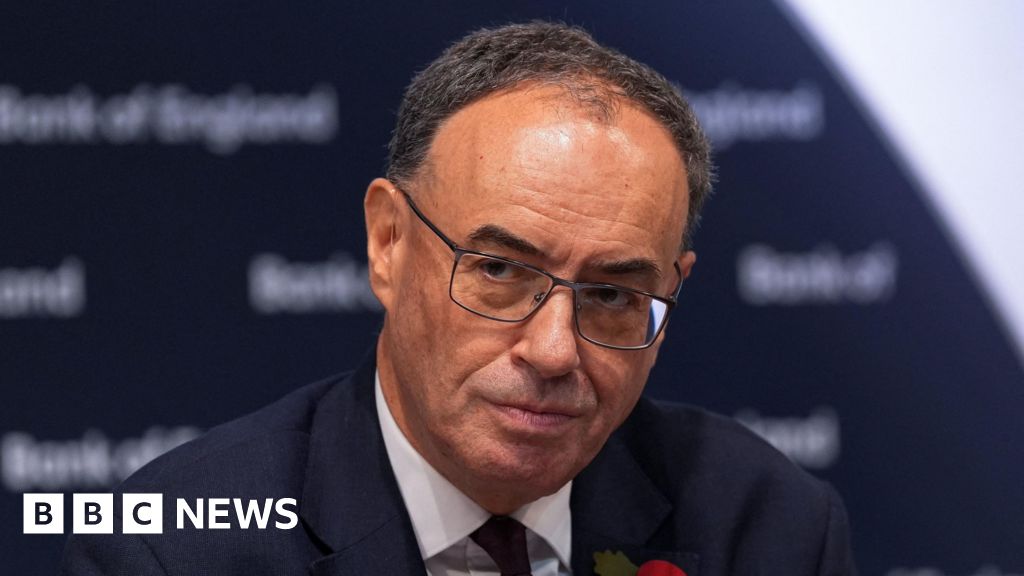
Prof David Miles from the Office for Budget Responsibility (OBR) told MPs Rachel Reeves's comments ahead of announcing her tax and spending plans were "not inconsistent" with the situation she faced.
Reeves has rejected claims she misled the public about the country's finances after the OBR's economic forecasts revealed they were better than widely thought.
However, Prof Miles said despite the forecast, the chancellor still faced a "very difficult Budget and very difficult choices".
He said the OBR raised concerns with Treasury officials about leaks to the media in the run-up to the Budget, adding: "I think it was clear that we didn't find this helpful. We made that clear."
But he said the watchdog was not "at war" with the Treasury.
A political row has broken out over the information shared with the public over the past few weeks over the health of the economy and the choices required to be made by the chancellor.
Last week's Budget included a total £26bn of tax rises, with £8bn set to be raised by extending the freeze on income tax and National Insurance thresholds for a further three years. The two-child benefit cap was also scrapped.
In the build-up to the Budget, Reeves repeatedly talked about a downgrade to the UK's predicted economic productivity that would make it hard for her to meet her borrowing rules, fuelling speculation that the income tax rates themselves would be raised, which would break a manifesto pledge.
On 4 November, she used a rare pre-Budget speech in Downing Street to warn the UK's productivity was weaker "than previously thought" and that had "consequences for the public finances too, in lower tax receipts".
However, it has since emerged that the OBR, which assesses the government's tax and spending policies, had told the Treasury on 31 October that it was on course to meet its main borrowing rule by £4.2bn due to the downgrade in productivity being offset by higher wages, which increase the government's tax receipts.
The Conservatives have claimed the chancellor gave an overly pessimistic impression as a "smokescreen" to raise taxes in order to increase welfare spending, with leader Kemi Badenoch claiming she "lied to the public".
The £4.2bn buffer was less than the £9.9bn Reeves had left herself at the previous Budget, and Prof Miles told a committee of MPs, still "posed a significant" challenge to the government, which wanted to increase the figure overall.
The so-called headroom chancellors have left themselves - essentially a buffer to fall back on - has been smaller in recent years. Prior to November 2022, chancellors tended to create a £20bn-£30bn buffer.
Questioned by MPs over the chancellor not mentioning the surplus in the forecast, Prof Miles said the £4.2bn, while a positive number, "was by a tiny margin", adding that the OBR was not actually looking for it to be interpreted as "this is very, very good news, there is no hole to fill - as people were saying".
"I don't think it was misleading, for my own view, for the chancellor to say that the fiscal position was very challenging at the beginning of that week.
"The chancellor was saying that this was a very difficult Budget and very difficult choices needed to be made. And I don't think that that was in itself inconsistent with the final pre-measures assessment we'd made, which, although it showed a very small positive amount of so-called headroom, it was wafer thin."
Prof Miles added that the £4.2bn buffer would also have been reduced to minus £3bn because the OBR's forecast did not take into account the welfare and winter fuel payment U-turns made by the government.